Travel Guide
Hike the Great Wall of China: Full Guide
Everything you need to hike the Great Wall of China: section ratings, overnight itineraries, fitness prep, seasonal tips, and solo vs. guided costs.
Everything you need to hike the Great Wall of China: section ratings, overnight itineraries, fitness prep, seasonal tips, and solo vs. guided costs.
Last updated: 2026-08-08
Few experiences in outdoor travel match a multi-day traverse of the Great Wall: ancient stonework threading across mountain ridges, hawk-eye views into river valleys, and the particular satisfaction of covering real distance under your own power. This guide covers everything from choosing your section and timing your visit to training your body and deciding whether to hire a guide. The Wall is one thread in China’s wider network of hiking trails worth traveling for.
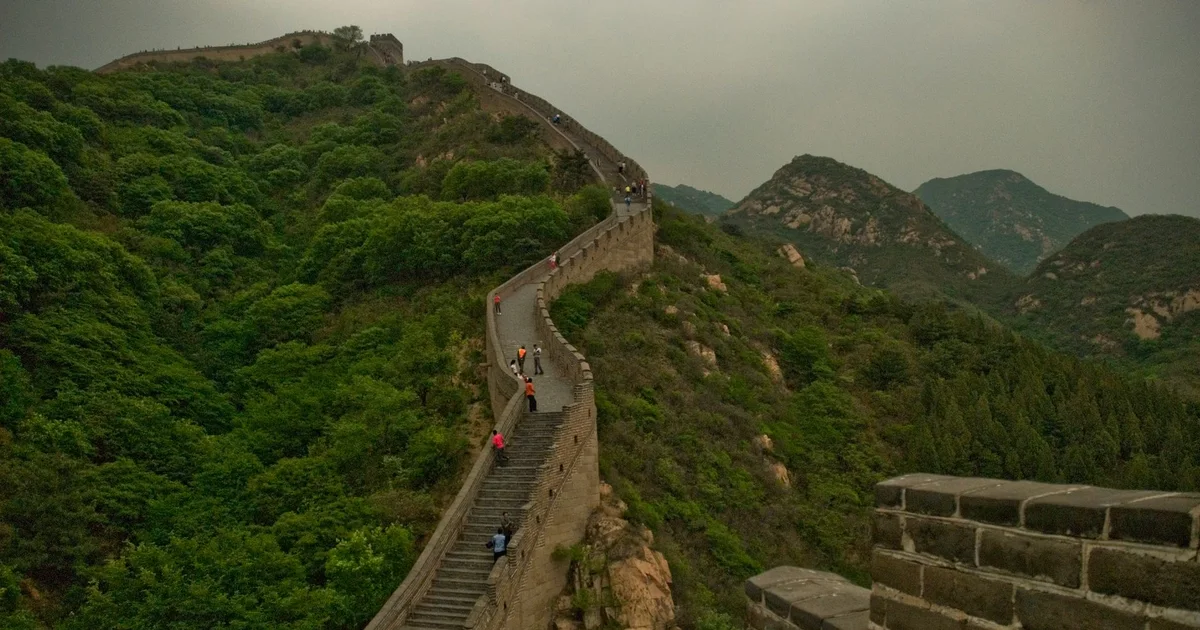
Section difficulty at a glance. Mutianyu (moderate, restored, ¥40 entrance per person, as of August 2026 — confirm at the gate; adult, entrance only) and Jinshanling (moderate–challenging, partly restored, ¥65 peak / ¥55 off-season per person) are the best starting points. Simatai West (moderate, night tours available, ¥40 per person) and Gubeikou (moderate–challenging, semi-wild, free) suit hikers ready for longer distances. Jiankou (challenging–expert, unrestored, no ticket but check restrictions) demands scrambling experience and comfort with exposure.
Best seasons. September–October is the peak hiking window: temperatures sit between 10–22°C, skies are consistently clear after summer rain, and deciduous trees on the ridge turn amber and red. Late March through May brings wildflower growth and warming temperatures, though late April can bring rain. Winter (December–February) means sub-zero nights, snow on the stones, and almost no other hikers — beautiful but requiring serious cold-weather preparation. June–August is humid, hazy, and crowded at accessible sections.
Permits and access. Restored sections sell tickets at the gate; no advance booking required except for Simatai night tours (book online via simatai.com.cn). Unrestored sections are a grey area — officially restricted in some zones, tolerated in others. Always check current regulations at chinatrailfolk.com before setting out, as enforcement changes seasonally.
Getting there from Beijing. Mutianyu: 90 minutes by car or bus 916 + shuttle from Huairou. Jinshanling: 2.5 hours by car or weekend direct bus on Bus No. 33 from Wangjing West Hub (Wangjing West subway, Exit E, Platform 6), which runs weekends and public holidays only (¥64 round trip per person, as of June 2026 — confirm at the gate). Jiankou and Huanghuacheng: 2 hours by car. From Tianjin, add 1–1.5 hours. For multi-section treks, a hired driver (¥600–¥1,000+ per vehicle per day, as of June 2026 — confirm with the operator) is the most flexible option.
Gear essentials. Ankle-support hiking boots, trekking poles, 2–3 liters water capacity, sun hat, windproof shell, and at least two warm layers for ridge wind. For overnight treks: sleeping bag rated to 5°C minimum (lower in winter), headlamp, and an offline GPS map loaded before you lose cell signal.
Realistic timelines. Weekend trip: arrive Friday evening, hike Saturday (Jinshanling to Simatai, 10km, 5–6 hours), return Sunday. One week: Huanghuacheng → Jiankou → Mutianyu → Jinshanling → Gubeikou → Simatai (5 hiking days, 60km+). Multi-week thru-hike: the full Beijing-accessible wall corridor spans 200km+ and takes 15–20 days moving steadily.
Wild wall vs. restored sections. Restored sections offer safety, clear paths, and nearby services. Wild-wall sections — Jiankou, Huanghuacheng, parts of Gubeikou — deliver solitude and untouched drama, but involve crumbling steps, waist-high vegetation in summer, and real navigation challenges.
Where to sleep. Camping on the wall itself is prohibited and carries fines if caught. Village guesthouses (农家院, nóngjiā yuàn) at Xizhazi (Jiankou base), Gubeikou village, and Simatai West cost ¥80–¥150 per bed (as of June 2026 — confirm when booking) and usually include a simple dinner and breakfast; branded or platform-listed homestays with private rooms run higher. Book ahead on weekends in October — they fill fast.
Water and food. Carry all water for wild sections; no reliable sources on the ridge. Village guesthouses sell bottled water (¥5–¥10 per bottle, as of June 2026 — confirm at point of sale). Snack resupply is possible at Jinshanling and Simatai visitor centres. Pack high-calorie snacks — dried fruit, nuts, energy bars — for mid-ridge stretches.
2-day itinerary (Beijing base): Day 1 — transfer to Jinshanling, hike east to Simatai (10km, 5–6 hours), overnight at Simatai West guesthouse. Day 2 — explore Simatai towers at sunrise, return to Beijing by noon.
5-day itinerary: Day 1 — Jiankou wild section day hike, overnight Xizhazi village. Day 2 — traverse to Mutianyu, overnight Mutianyu village. Day 3 — transfer to Gubeikou, afternoon hike, overnight Gubeikou village. Day 4 — Gubeikou to Jinshanling full traverse (15km). Day 5 — Jinshanling to Simatai, return to Beijing.
Altitude context. The Great Wall sits between 400–1,000m elevation — no acclimatization is needed. What matters is cumulative climbing: a full Jinshanling–Simatai day involves 600–800m of ascent on uneven stone, which taxes legs and knees differently than trail hiking. Prepare for that specific demand. If it’s your first multi-day hike in the country, build up on some hiking trails in China for beginners first.
8–12 week training plan. Weeks 1–4: build base with 3–4 weekly walks of 45–60 minutes, including stair climbing (aim for 20+ floors per session). Weeks 5–8: add weekend hikes of 12–18km with 500m+ elevation gain and a loaded pack (8–10kg). Weeks 9–12: increase frequency to 5 days per week, include back-to-back long hiking days to simulate multi-day effort.
For hikers over 40. Prioritize knee and hip flexor strength: add Bulgarian split squats, step-downs, and lateral band walks to each training week. Downhill stone steps are the primary injury trigger — eccentric quad strength is your best defence. Trekking poles reduce knee load by 20–25% on descents; use them from day one, not just when tired.
Injury prevention on trail. Pace the first hour conservatively — the most common error is going hard out of the gate on cold muscles. Take a 5-minute break every 90 minutes. Change into dry socks at midday if feet are sweating. Blisters on uneven stone escalate quickly; tape known hot spots before they form.
Spring (late March–May). Wildflowers — forsythia, apricot blossom — carpet the hillsides below the wall in April. Temperatures climb from around 8°C in late March to 22°C by May. Light crowds through April; May sees a rise in domestic tourism around the Labour Day holiday (first week of May — avoid if possible). Occasional rain requires waterproof layers.
Autumn (September–October). The consensus best season. Post-summer clarity means 50–80km visibility from ridge towers. Temperatures of 10–22°C are ideal for sustained hiking. Foliage peaks mid-October. Book accommodation 2–3 weeks ahead for the National Holiday week (first week of October) or avoid it entirely — crowds at popular sections are severe.
Winter (December–February). Snow transforms the wall into one of China’s most photogenic landscapes. Expect -5°C to -15°C overnight at elevation, with daytime highs around 0–5°C. Ice on the stone is the primary hazard — microspikes or crampons are mandatory on any slope. The reward: completely empty trails and extraordinary photography conditions.
The cost reality. Guided Great Wall treks from specialist operators cost $150–$300 USD per person per day, covering transport, English-speaking guide, accommodation, and meals. Solo hiking totals $20–$40 USD per day: entrance tickets (¥40–¥65 per person, as of June 2026 — confirm at the gate), local transport, village guesthouse (¥80–¥150/night), and food (¥50–¥80/day). Over a 5-day trip, that gap is $600–$1,300 USD per person.
Where guides earn their fee. On restored sections with clear paths, a guide is a comfort purchase. On wild-wall sections — Jiankou, remote Gubeikou stretches — guides provide genuine safety value: route knowledge on unmarked ridge paths, local contacts for emergency situations, and fluent Mandarin for navigating villages with no English signage.
Solo navigation tools. Download Gaia GPS or Maps.me offline maps before leaving Beijing. The Great Wall hiking routes shared in online communities (AllTrails has partial coverage; dedicated wall hiking forums have GPX files) are more reliable than Google Maps for unmarked sections. A basic Mandarin phrasebook — or the Pleco app — handles most village interactions.
Language barrier reality. At Jinshanling and Mutianyu, English signage exists. In villages between sections, expect zero English. Showing a written destination in Chinese characters on your phone solves 90% of transport and accommodation situations. Learning five to ten practical phrases — directions, food, accommodation — meaningfully improves your experience and earns goodwill from locals.
The honest recommendation. First Great Wall hike: go solo on Jinshanling or Mutianyu, save the guide budget for another trip. Wild sections (Jiankou) or custom multi-day routes: consider a guided trip for at least the first day, or join a small group operator to share costs and reduce navigation risk.
Prices, ticket rules, opening hours, and transport across China change often — sometimes month to month. The figures in this guide are dated estimates, current as of the “Last updated” date shown above, not live quotes. Confirm current fares, passes, and schedules locally (or with your operator) before you travel.