Travel Guide
Zhangjiajie Forest: The Complete Trekker's Guide
Plan your Zhangjiajie forest trek with trail strategy, wild routes, seasonal timing, and photography tips for China's most dramatic karst landscape.
Plan your Zhangjiajie forest trek with trail strategy, wild routes, seasonal timing, and photography tips for China's most dramatic karst landscape.
Last updated: 2026-08-08
Most visitors to Zhangjiajie National Forest Park follow the same loop: ride up to Yuanjiajie, shuffle the Avatar Mountains boardwalk, ride the Bailong Elevator down, done. That circuit is crowded, passive, and misses the actual terrain. Here’s how to build a smarter itinerary. Zhangjiajie is one stop on a country full of real hiking trails worth the trip.
A single Zhangjiajie National Forest Park / Wulingyuan core-area ticket covers all four scenic zones—Yuanjiajie, Tianzi Mountain, Yangjiajie, and Yellow Stone Village—plus Golden Whip Stream and the free internal eco-bus network that links them. The ticket is valid 4 consecutive days and costs ¥165 per person year-round — Hunan province abolished the peak/off-season split on 1 January 2025, so there is no longer a cheaper winter rate. The scenic-vehicle combination ticket, which bundles the park’s shuttle network, is ¥236 per person on the same 4-day validity (both as of August 2026 — confirm at the gate; per person, full-fare adult). Advance reservation has been required since June 2025. Cable cars and the Bailong Elevator are paid surcharges on top of the ticket.
Crown trails vs. tourist main loops. The Yuanjiajie Scenic Area boardwalk handles thousands of visitors daily and offers limited elevation change. The real reward sits on the Tianzi Mountain ridge trails and the Yangjiajie upper plateau, where stone paths cut through dense forest with far fewer people. The Shentang Bay viewpoint trail from Tianzishan Village is particularly underused and delivers unobstructed pillar views without boardwalk railings in every shot.
Realistic daily distances. Expect 10–15km per day on marked trails, which translates to five to seven hours of walking given the constant staircase terrain. Drop to 8–10km if you’re carrying a full overnight pack. The elevation changes are significant—descents from the Tianzi Mountain plateau to valley level involve 1,000m+ of cumulative steps.
Private guide vetting. Hire guides through your guesthouse or through the Zhangjiajie Tourism Bureau. Confirm they know the Yangjiajie sector specifically if that’s your objective—many guides concentrate only on Yuanjiajie. Guide fees run ¥400–¥700 per day per private English-speaking guide (as of June 2026 — confirm at the gate). A good guide will also know current trail closures, which happen frequently after heavy rain.
Guesthouse locations. Stay inside the park rather than commuting from Wulingyuan town. Tianzishan Village (天子山村) and the Yangjiajie base area both have small homestays charging ¥120–¥280 per room per night (as of June 2026 — confirm at the gate; budget homestay, varies seasonally). Booking ahead is essential from September through November. Staying inside means you reach sunrise viewpoints 45 minutes before day-trippers arrive.
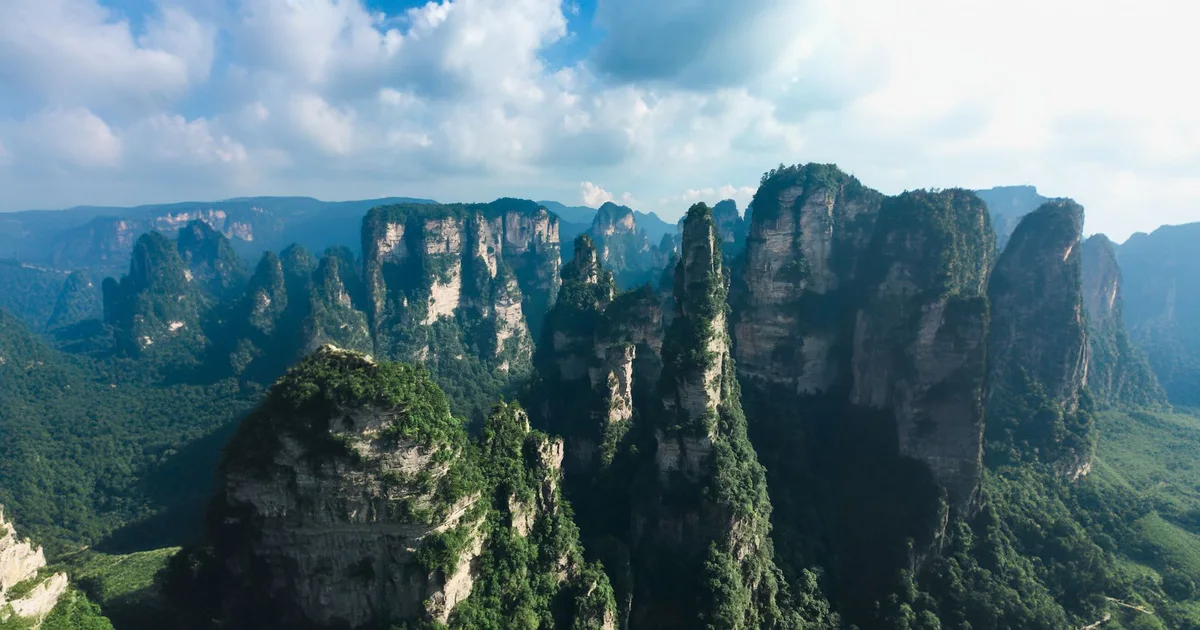
Photographic vantage points and seasonal mist windows. Mihun Terrace catches first light on the central pillar clusters. The Tianmen Fox Immortal Platform frames the full Avatar Mountain formation. Both require arriving before 6:30am. Mist windows are most reliable October through November and again in March, when overnight cooling generates valley fog that clears by mid-morning—plan to shoot between 6:30am and 9:00am for the best conditions.
The Zhangjiajie forest contains a network of older stone trails that connect the three main ridge systems and see a fraction of boardwalk traffic. This is where the park becomes a genuine trekking destination.
Avatar Mountains to Tianzi Mountain ridge connector. From Yuanjiajie, a marked but unmanicured trail drops north into Shentang Bay before climbing back onto the Tianzi Mountain plateau. This section takes four to five hours and involves a serious 600m descent followed by a steep re-ascent. It’s not signposted in English. Download the trail on Maps.me or AllTrails before entering.
Yangjiajie ridge loop. Yangjiajie is one of the four scenic zones inside the park, west of Yuanjiajie and covered by the same single entrance ticket. Reach it on the park’s free internal eco-bus (included in admission), which links the Yuanjiajie No.1 Bridge, Wulong Village (Yangjiajie cableway upper station), Dingxiangrong, and Tianzishan sectors, running roughly 07:00–18:00; the ride between sectors takes 30–40 minutes. The ridge trail system here includes the Tianbo Mansion viewpoint and the Hallelujah Mountain trail, both accessible on a quiet loop that takes six to seven hours. Crowd levels are roughly 20% of Yuanjiajie on equivalent days.
2–3 day wild loop. Day one: enter Yangjiajie, hike the ridge to overnight guesthouse at Yangjiajie base village. Day two: take the connector trail northeast toward Tianzi Mountain, overnight at Tianzishan Village. Day three: traverse Shentang Bay trail to Yuanjiajie, exit via Bailong Elevator. This loop covers approximately 38km total and genuinely avoids the tourist main corridors for the majority of walking hours.
Guesthouse village basecamps. Both Tianzishan Village and Yangjiajie base area function as practical basecamps. Meals at village guesthouses cost ¥25–¥45 per person for set dinners featuring local Tujia dishes (as of June 2026 — confirm at the gate; per person, home-cooked set dinner). Confirm dinner availability when booking—some smaller guesthouses require advance notice.
Summer (June–August). Expect heavy rainfall, high humidity, and persistent cloud cover that obscures pillar formations for days at a time. Trails are slippery and leeches appear on lower forest paths. Temperatures reach 28–34°C in valley areas. Summer suits visitors who prioritize waterfalls (all running at full volume) over summit views.
Autumn (September–November). This is the standout season. October and November deliver consistent clear skies, excellent visibility across the karst formations, and comfortable temperatures of 12–22°C. Foliage turns orange and red on the ridge slopes from late October. Book guesthouses eight to ten weeks ahead for this window. Avoid the first week of October (National Holiday) entirely.
Winter (December–February). Cold (2–10°C on the plateau), sometimes snowy, and dramatically undervisited. Frozen waterfalls appear after sustained cold spells. Snow on the pillar tops creates surreal scenes. Some cable cars and upper trails close during ice events—check park announcements before travel. The lower forest trails remain walkable throughout winter.
Spring (March–May). March brings wildflower blooms along the valley trail margins and fresh green foliage on the cliff faces. Mist is frequent and dramatic through April. By May, rainfall increases and trail conditions deteriorate toward the summer pattern. The March–early April window is excellent for photographers who want soft light, color, and mist simultaneously.
Sunrise and sunset positioning. Mihun Terrace faces east and catches direct golden-hour light on the central pillars from 6:15–7:00am. For sunset, position at the Tianmen Fox Immortal Platform or the west-facing Tianzi Mountain overlook, where light hits the pillar faces from 5:30–6:30pm in autumn. Both locations require overnight accommodation inside the park to arrive pre-dawn without rushing.
Golden-hour peak timing. The pillars glow most intensely during the 20-minute window immediately after sunrise and 25 minutes before sunset. Cloud behavior matters more than clock time—overcast days produce flat results regardless of timing. Check weather forecasts the evening before and adjust your morning plan accordingly.
Gear weight trade-offs. A mid-range mirrorless body with a 24–70mm and a 70–200mm covers 90% of compositions without excessive weight. Leave the tripod unless you shoot specifically for long-exposure mist work—the trail terrain makes carrying it uncomfortable over multi-day distances. A lightweight gorilla-style flexible tripod works adequately on the stone platform railings for stabilized shots.
Drone permit status. Drones are prohibited inside the UNESCO core zone. No individual permits are available through standard channels. Attempting to fly without authorization risks equipment confiscation and fines. Work from designated platforms and use long telephoto compression to achieve the layered pillar compositions that drone shots typically capture.
Composition tips for layered karst peaks. The most compelling images use foreground vegetation (pine branches, cliff-edge shrubs) to frame the midground pillar formations against a fog-filled background valley. Shoot slightly telephoto (85–135mm equivalent) to compress the layers. Early morning mist filling the valleys creates the natural depth separation that makes Zhangjiajie forest photography distinctive. Position yourself above the fog line for the classic floating-pillars effect.
Prices, ticket rules, opening hours, and transport across China change often — sometimes month to month. The figures in this guide are dated estimates, current as of the “Last updated” date shown above, not live quotes. Confirm current fares, passes, and schedules locally (or with your operator) before you travel.