Travel Guide
Mount Huashan China: Plank Walk & Routes
Mount Huashan China trek guide: the Plank Walk, all five peaks, cable car vs Soldiers' Trail, ¥160 entry and real 2026 costs.
Mount Huashan China trek guide: the Plank Walk, all five peaks, cable car vs Soldiers' Trail, ¥160 entry and real 2026 costs.
Last updated: 2026-08-08
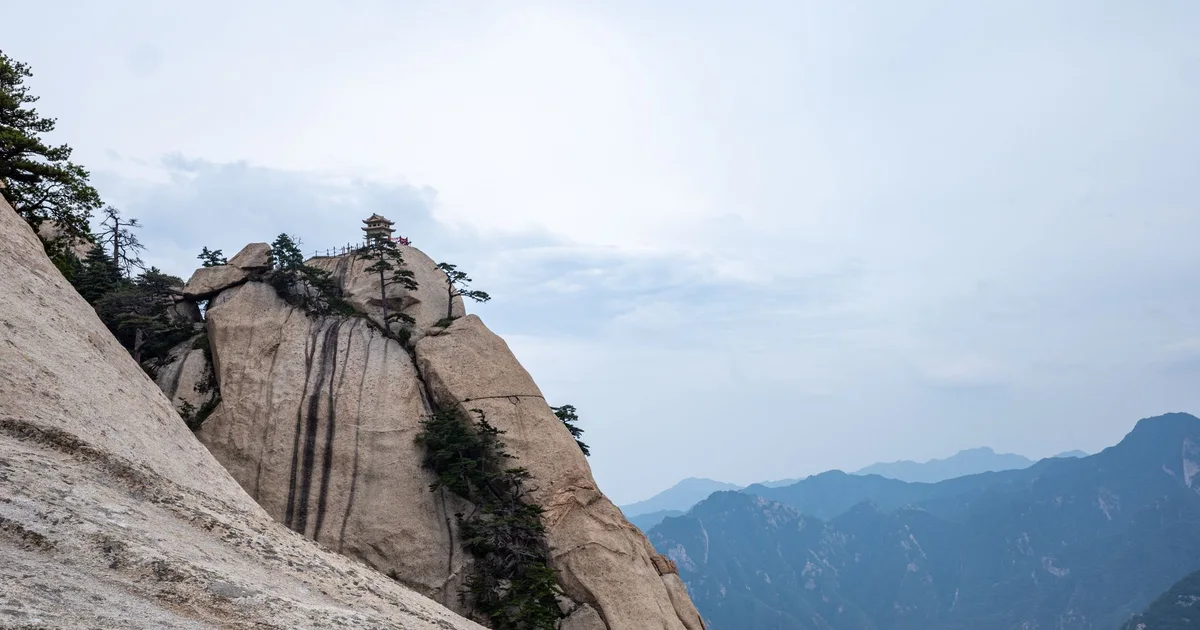
Mount Huashan sits in Shaanxi Province, roughly 120km east of Xi’an, rising sharply from the Wei River plain to a summit cluster of five peaks. The highest—South Peak—reaches 2,154.9m. The mountain is one of China’s Five Sacred Daoist Mountains, and that religious heritage shows everywhere: incense smoke from summit temples, inscriptions carved into cliff faces, and pilgrims mixed with trekkers on every trail. For travelers still asking whether the country delivers serious trekking, Huashan is one of the most rewarding hiking trails in China to build a trip around.
Two main ascent routes define most itineraries.
The Soldiers’ Trail (Yu Quan Yuan trailhead) is the classic full ascent: 6,000+ stone steps from base to North Peak, gaining roughly 1,500m over 8–10km. It’s relentless and fully exposed—no cable car shortcut until you’re already high on the mountain. Budget 4–6 hours up, 3–4 hours down. This is the route for anyone who wants the full Huashan experience. If 6,000 steps sounds punishing, it is—first-timers may prefer to warm up on easier hiking trails in China for beginners before committing to a full sacred-mountain ascent.
The North Peak Cable Car cuts the slog to under 10 minutes, depositing you at 1,614m. From North Peak you can then traverse to Central, East, South, and West peaks over 4–6 hours of ridge walking and chain scrambling. This hybrid approach suits most visitors well.
Multi-day option: Stay at one of the guesthouses or basic hotels directly on the mountain—mainly clustered near Central Peak. Arriving late afternoon, catching the sunset from West Peak, then watching sunrise from East Peak is one of the best 24-hour experiences in Chinese hiking culture. Village base camps below (Huayin town, 15 minutes by taxi from the cable car base) offer better food, cheaper beds (¥100–¥200 per night, as of June 2026 — confirm when booking), and a less crowded launch point for an early morning start.
Seasons: April–May and September–November are optimal. Autumn brings the clearest visibility and manageable temperatures (10–22°C on the peaks). Summer sees brutal heat at the base and long cable-car queues. Winter is passable for experienced hikers with the right gear—ice on the chains is the main hazard.
Temple context: Huashan’s summit temples date to the Tang Dynasty. The Jade Maiden Temple on West Peak and the Zhenyue Gong on South Peak are active religious sites, not just photo stops. Factor quiet time into your schedule.
Three routes ranked by scramble difficulty and chain exposure:
North Peak via Soldiers’ Trail + South Peak Plank Walk — The hardest full route. Chain-assisted vertical rock faces on the Soldiers’ Trail approach, followed by the Plank Walk: a wooden ledge path on the cliff face of South Peak. Exposure rating: extreme. Harness mandatory (provided on-site, ¥30 per person, as of August 2026 — confirm at the gate).
North-to-East Peak Ridge Traverse — Sustained chain work across the ridge connecting North and East peaks. Physically demanding, moderately exposed. Chains are well-maintained; footing is the main challenge in wet or icy conditions.
Cable Car to West Peak Circuit — Lowest scramble difficulty. Some short chain-assisted steps but nothing sustained. Best for those building mountain confidence before committing to the harder lines.
Altitude and acclimatization: At 2,154.9m, Huashan sits below the threshold where acute mountain sickness typically develops in otherwise healthy adults. Sea-level visitors rarely experience true AMS. What they do experience is early onset muscular fatigue amplified by sustained steep terrain. Hydrate proactively (carry at least 2L from the base), avoid rushing the chain sections, and plan a 20-minute rest at North Peak before continuing the traverse.
Basecamp logistics: Huayin city (served by high-speed rail from Xi’an in ~40 minutes, ¥54.5 second class per person one-way, as of August 2026 — confirm at the station) is the practical basecamp. Hotels here run ¥150–¥350 per night. The official tourist eco-shuttle from Huayin to the trailhead costs ¥40 return per person on the North Peak line / ¥80 return per person on the West Peak line. Start no later than 6:00am for a full five-peak day.
Entrance pricing right now: the standard adult ticket is ¥160 per person in peak season (1 March–30 November) and ¥100 in winter (1 December–end February). Between 15 July and 10 October 2026 the scenic area is running an official half-price promotion at ¥80 per person on the adult main-peak ticket, open to all visitors and requiring advance real-name, timed-entry booking — there are no general ticket windows on site. The promotion covers the gate ticket only: cable cars, shuttle buses, and the ¥30 Plank Walk harness are charged at their normal rates (all as of August 2026 — confirm at the gate).
Huashan is one of China’s most infrastructure-heavy mountains. That’s a genuine asset for solo female visitors: rangers patrol regularly, CCTV covers major trail sections, and mandatory harnesses on the Plank Walk mean no one is left to self-assess their safety gear.
Guide vs. independent: Most experienced female hikers do Huashan independently without issue. A guide adds value mainly for navigation on the first visit and for those who want a dedicated pace-setter on the longer Soldiers’ Trail approach. Reputable agencies charge ¥300–¥600 for a full-day guide (as of June 2026 — confirm with the operator; rates vary by group size). The mountain’s waymarking is clear enough that independent navigation is straightforward.
Crowding patterns: Summer (July–August) brings the heaviest domestic tourism. Queues for the Plank Walk can stretch 30–60 minutes, narrowing the path and increasing the psychological pressure. For solo female travelers who prefer a calmer environment, October and April are the best months—crowds are moderate, weather is stable, and the mountain feels more contemplative.
Practical safety notes: Dress in layers for the peaks regardless of valley temperatures. Secure loose items (bags, phone lenses) with lanyards on all chain sections. Porters and vendors on the mountain are accustomed to solo visitors and are generally non-intrusive. Overnight stays on the peak are busy enough that isolation is not a concern.
A full Huashan traverse demands leg endurance, grip strength, and functional core stability. Here is a structured preparation framework.
Weeks 1–4 (Foundation): Three stair-climbing sessions per week, 30–45 minutes each, adding a loaded pack (8–10kg) by week three. Two strength sessions targeting glutes, quads, and hamstrings: Romanian deadlifts, step-ups, split squats. Two grip sessions per week: dead hangs (30–60 seconds), towel pull-ups, farmer’s carries.
Weeks 5–8 (Volume Build): Extend stair sessions to 60–75 minutes. Add one long weekend hike (10–15km, 600m+ elevation gain) per week. Introduce incline treadmill intervals. Grip training upgrades to weighted dead hangs and rope climbing if accessible.
Weeks 9–12 (Specificity): Simulate the chain sections with pull-up bar traverses and assisted rope descents. Complete two back-to-back long hiking days on consecutive weekends to rehearse multi-hour output. Taper the final week: lighter loads, focus on mobility and rest.
For hikers 40+: Prioritize injury prevention over volume. Replace high-rep jump training with controlled eccentric movements. Add 10 minutes of hip flexor and ankle mobility work daily. Knee sleeves are worth considering for the steep descent sections. Recovery time between sessions matters more than raw training hours—build in rest days strictly.
Grip endurance is non-negotiable. The chain sections on Huashan require sustained gripping while body-weighting the arms on steep or near-vertical rock. If your grip fatigues after 30 seconds of dead hang, you are not ready for the Soldiers’ Trail upper sections. Build to 90-second comfortable hangs before your trip.
Most travelers reach Huashan through Xi’an, which makes it a natural anchor for a longer itinerary. An overnight train north puts Beijing within reach to hike the Great Wall of China along its wild, unrestored sections, while a flight south opens up a Zhangjiajie forest trek among the sandstone pillars that inspired Avatar. Both pair naturally with a Huashan stop on a multi-region China hiking trip. For a broader view of what China’s landscape offers across all regions — from karst valleys to desert dunes — see the best outdoor adventures in China overview.
Prices, ticket rules, opening hours, and transport across China change often — sometimes month to month. The figures in this guide are dated estimates, current as of the “Last updated” date shown above, not live quotes. Confirm current fares, passes, and schedules locally (or with your operator) before you travel.